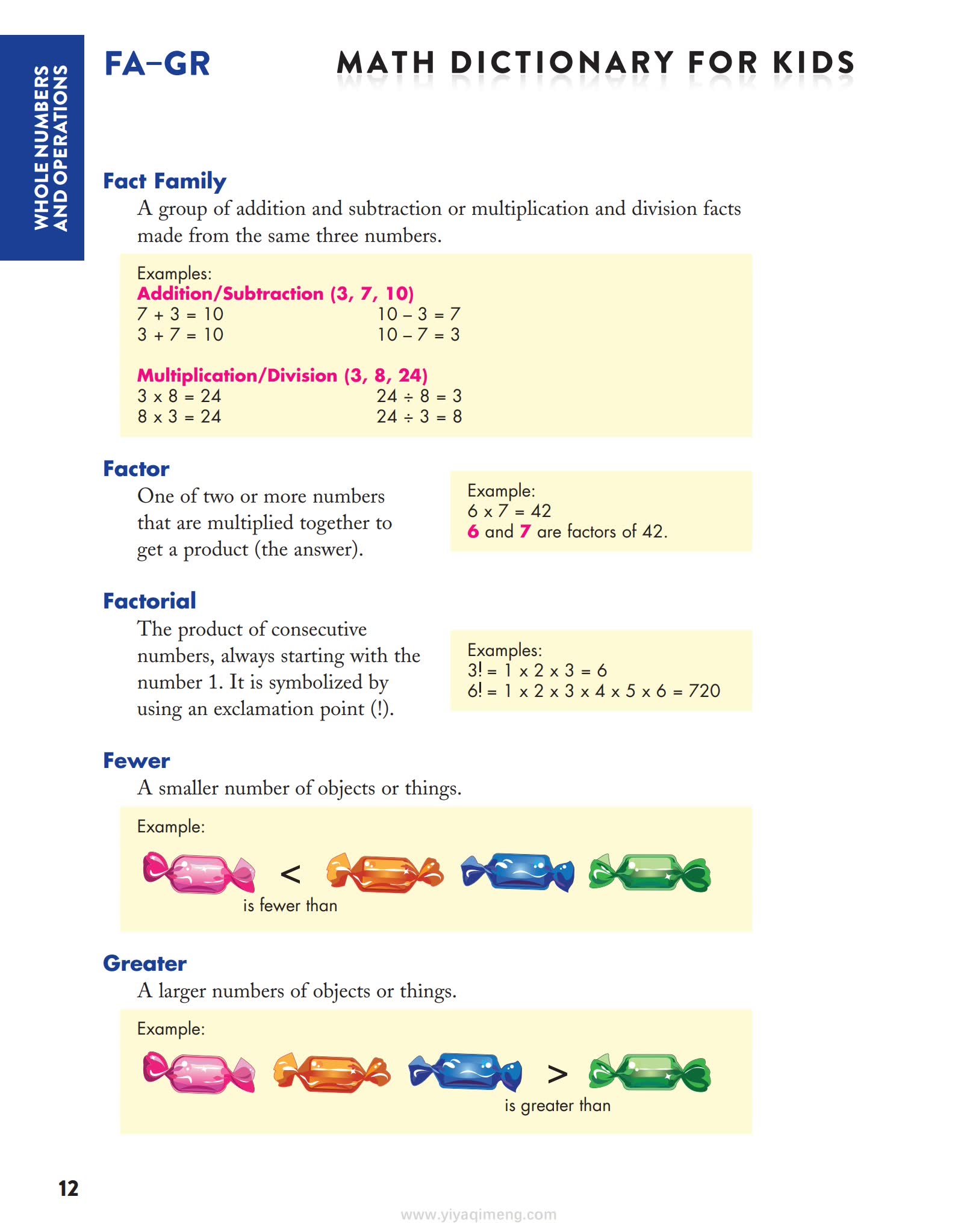

In the realm of education, providing children with the right tools to understand and excel in mathematics is crucial. One such tool that has gained substantial tending is the Children's Maths Dictionary. This imagination is designed to get complex numerical concepts approachable and employ for young learners. By breaking down intricate terms and ideas into mere, understandable language, a Children's Maths Dictionary serves as a worthful companion for both students and educators.
Understanding the Importance of a Children's Maths Dictionary
A Children's Maths Dictionary is more than just a list of definitions; it is a comprehensive guide that helps children build a strong fundament in mathematics. By supply clear and concise explanations, it aids in demystify numerical concepts that might otherwise seem daunt. This dictionary is particularly utile for children who are just beginning to explore the world of numbers, shapes, and equations.
One of the key benefits of a Children's Maths Dictionary is its power to foster a love for mathematics. When children can understand and relate to mathematical concepts, they are more probable to enjoy learning. This positive association can lead to bettor performance and a lifelong interest in the subject.
Key Features of a Children's Maths Dictionary
A easily designed Children's Maths Dictionary includes several features that create it an essential resource for young learners. These features ensure that the dictionary is not only informative but also engaging and easy to use.
- Age Appropriate Language: The dictionary uses mere and age allow language to explain complex mathematical terms. This ensures that children can understand the concepts without feeling overcome.
- Visual Aids: Illustrations, diagrams, and examples are often include to help children project mathematical concepts. These ocular aids make learning more interactive and memorable.
- Interactive Elements: Some dictionaries include interactive elements such as quizzes, puzzles, and activities that reinforce see. These elements make the dictionary more engage and assist children retain info punter.
- Comprehensive Coverage: A good Children's Maths Dictionary covers a wide range of mathematical topics, from introductory arithmetic to more advanced concepts like geometry and algebra. This ensures that children have a well rounded read of mathematics.
How to Use a Children's Maths Dictionary Effectively
To maximise the benefits of a Children's Maths Dictionary, it is significant to use it efficaciously. Here are some tips on how to make the most out of this imagination:
- Regular Reference: Encourage children to refer to the dictionary regularly, especially when they encounter new numerical terms or concepts. This will help them construct a strong vocabulary and understanding of mathematics.
- Interactive Learning: Use the interactive elements in the dictionary to get learn more fun and prosecute. Encourage children to solve puzzles, take quizzes, and enter in activities related to the topics they are learning.
- Parental Involvement: Parents can play a important role in helping children use the dictionary effectively. By reading the definitions together and discussing the concepts, parents can reinforce learning and provide additional back.
- Practice and Application: Encourage children to employ the concepts they discover from the dictionary in existent life situations. This will help them understand the virtual applications of mathematics and create learning more meaningful.
Note: It is significant to choose a Children's Maths Dictionary that is age appropriate and aligns with the child's curriculum. This will ensure that the dictionary is relevant and useful for their con needs.
Benefits of Using a Children's Maths Dictionary
The benefits of using a Children's Maths Dictionary are numerous. Here are some of the key advantages:
- Improved Understanding: By provide open and concise explanations, a Children's Maths Dictionary helps children see numerical concepts better. This meliorate understanding can lead to wagerer execution in school and a stronger foundation in mathematics.
- Enhanced Vocabulary: The dictionary helps children build a potent numerical vocabulary. This is important as it enables them to communicate numerical ideas more efficaciously and understand complex concepts better.
- Increased Confidence: When children can understand and utilize numerical concepts, they gain confidence in their abilities. This self-confidence can actuate them to explore more advanced topics and excel in mathematics.
- Engaging Learning Experience: The interactive elements and optic aids in a Children's Maths Dictionary make learning more absorb and enjoyable. This can foster a lifelong interest in mathematics and encourage children to pursue further studies in the subject.
Examples of Mathematical Terms Explained in a Children's Maths Dictionary
A Children's Maths Dictionary covers a broad range of numerical terms. Here are some examples of how these terms might be explain:
| Term | Explanation |
|---|---|
| Addition | Adding numbers together to regain the full. for instance, 2 3 5. |
| Subtraction | Taking one number away from another to find the difference. for instance, 5 2 3. |
| Multiplication | Finding the full of a number added to itself a certain number of times. for instance, 3 x 4 12. |
| Division | Splitting a number into equal parts. for representative, 12 3 4. |
| Geometry | The study of shapes, sizes, and positions of objects. It includes topics like lines, angles, and shapes. |
| Algebra | The study of mathematical symbols and the rules for misrepresent these symbols. It involves clear equations and detect unknown values. |
Note: The explanations in a Children's Maths Dictionary are designed to be simple and easy to understand. They often include examples and optical aids to aid children grasp the concepts better.
Integrating a Children's Maths Dictionary into the Curriculum
Integrating a Children's Maths Dictionary into the curriculum can enhance the larn experience for children. Here are some ways to do this:
- Classroom Reference: Teachers can use the dictionary as a classroom reference instrument. They can encourage students to look up terms and concepts they do not realize and discuss them in class.
- Homework Assignments: Assignments can be designed to incorporate the use of the dictionary. for illustration, students can be inquire to find definitions of specific terms and write short paragraphs explaining them.
- Interactive Lessons: Teachers can use the interactive elements in the dictionary to make engaging lessons. for instance, they can conduct quizzes or puzzles found on the topics extend in the dictionary.
- Parental Involvement: Parents can be boost to use the dictionary at home to back their children's learning. They can read the definitions together and discuss the concepts, reinforcing what is taught in school.
By integrate a Children's Maths Dictionary into the curriculum, educators can furnish children with a valuable resource that supports their memorise and helps them build a strong base in mathematics.
Conclusion
A Children s Maths Dictionary is an invaluable resource for young learners, furnish clear and concise explanations of numerical terms and concepts. By using this dictionary effectively, children can improve their understanding of mathematics, construct a strong vocabulary, and gain self-assurance in their abilities. The interactive elements and visual aids get hear more engaging and enjoyable, nurture a lifelong interest in the subject. Integrating a Children s Maths Dictionary into the curriculum can heighten the see experience and cater children with the tools they need to excel in mathematics.