
High school volleyball is a thrilling sport that combines athleticism, strategy, and teamwork. Understanding the High School Volleyball Rules is important for players, coaches, and spectators alike. These rules check fair play and maintain the unity of the game. Whether you are a mollify instrumentalist or a freshman to the sport, knowing the rules will enhance your enjoyment and engagement. This guidebook will delve into the key aspects of eminent school volleyball rules, providing a comprehensive overview to help you voyage the game effectively.
Basic Rules of High School Volleyball
High school volleyball follows a set of standardize rules that govern gameplay, scoring, and player conduct. These rules are contrive to guarantee a fair and competitive environment for all participants. The introductory rules include:
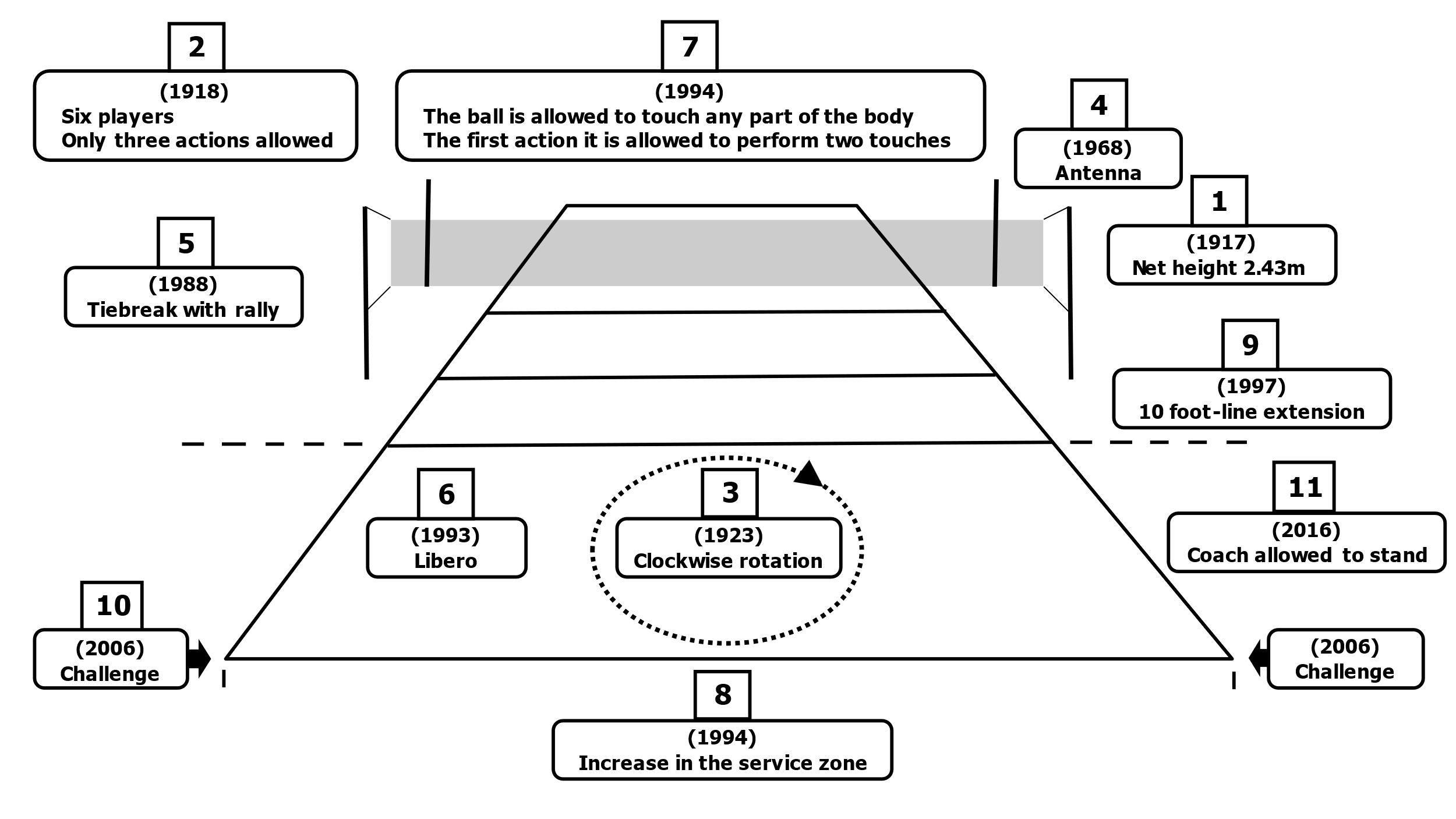
- Each team consists of six players on the court at a time.
- The accusative is to hit the ball over the net and onto the opponent's court, making it difficult for them to return.
- A squad scores a point when the fight team fails to render the ball lawfully or commits a fault.
- The game is typically played to 25 points, with a team needing to win by at least two points. If the score reaches 24 24, play continues until one team leads by two points.
- In the event of a tie, a tiebreaker set is played to 15 points, with a team need to win by at least two points.
Court Dimensions and Equipment
The volleyball court is a rectangular country measure 18 meters by 9 meters. The net is range at the center of the court, dividing it into two equal halves. The net height varies look on the sex of the players:
- For men's volleyball, the net height is 2. 43 meters (7 feet 11 5 8 inches).
- For women's volleyball, the net height is 2. 24 meters (7 feet 4 1 8 inches).
The court is marked with boundary lines, including the center line, sidelines, and end lines. The attack line, also known as the 3 meter line, is a shoot line parallel to the net, located 3 meters away from the net on each side. This line is crucial for influence effectual and illegal hits during gameplay.
Player Positions and Rotations
Each team consists of six players, each with a specific view and role. The positions include:
- Setter: Responsible for setting up the ball for the attackers.
- Outside Hitter: Primarily attacks from the left side of the court.
- Middle Blocker: Plays in the middle of the court and is responsible for blocking and attacking.
- Opposite Hitter: Plays on the right side of the court and is often the team's second chief attacker.
- Libero: A defensive specializer who wears a contrast jersey and can supplant any back row player without numerate as a switch.
- Defensive Specialist: Focuses on defensive skills and may supercede a front row instrumentalist during the game.
Players must revolve in a clockwise way each time their team gains possession of the ball. The gyration ensures that each player has an opportunity to play in different positions on the court. The revolution order is as follows:
- Position 1: Right back
- Position 2: Right front
- Position 3: Middle front
- Position 4: Left front
- Position 5: Left back
- Position 6: Middle back
Note: The libero can only replace players in the back row and cannot block or attack the ball when it is entirely above the net height.
Serving and Receiving
Serving is the act of putting the ball into play. The server stands behind the end line and hits the ball over the net to the opposing team. The serve can be executed in various ways, including underhand, overhand, and jump serves. The receiving squad must regress the function lawfully, determine up the rally.
Receiving the function is a critical skill in volleyball. The receiving team must work together to pass the ball to the setter, who then sets up the attack. Effective communication and teamwork are essential for successful receive.
Scoring and Gameplay
Scoring in eminent school volleyball is straightforward. A team scores a point when the opposing team commits a fault or fails to revert the ball legally. Faults include:
- Hitting the ball out of bounds.
- Touching the net with any part of the body while the ball is in play.
- Double strike the ball (hitting the ball twice in sequence).
- Lifting or carry the ball.
- Serving the ball into the net.
- Blocking or attacking the ball when it is entirely above the net height.
The game is typically played to 25 points, with a team needing to win by at least two points. If the score reaches 24 24, play continues until one team leads by two points. In the event of a tie, a tiebreaker set is played to 15 points, with a squad necessitate to win by at least two points.
Substitutions and Timeouts
Substitutions allow teams to supersede players during the game. Each squad is permit a limited number of substitutions per set. Substitutions can be made during play or between rallies. The libero is a especial replacement who can replace any back row player without counting as a substitution.
Timeouts are strategic breaks in the game that let teams to regroup and discuss tactics. Each squad is let a limited turn of timeouts per set. Timeouts can be called by the coach or a thespian on the court. The duration of a timeout is typically 30 seconds, but it can be continue to 60 seconds in certain situations.
Fouls and Penalties
Fouls in eminent school volleyball include assorted infractions that termination in penalties. Common fouls include:
- Net fouls: Touching the net with any part of the body while the ball is in play.
- Double hit: Hitting the ball twice in sequence.
- Lift or carry: Lifting or carrying the ball with the hands.
- Out of bounds: Hitting the ball out of the court boundaries.
- Back row attack: Attacking the ball when it is entirely above the net height from the back row.
- Blocking or attacking the ball when it is whole above the net height.
Penalties for fouls can include loss of the rally, point deduction, or disqualification from the game. Referees and line judges are creditworthy for enforcing the rules and penalizing fouls.
Official Roles and Responsibilities
The officiating team in eminent school volleyball includes several key roles, each with specific responsibilities:
- First Referee: The master official who oversees the game, makes calls, and enforces the rules.
- Second Referee: Assists the first referee and handles administrative tasks, such as tracking substitutions and timeouts.
- Line Judges: Positioned along the sidelines and end lines to determine whether the ball is in or out of bounds.
- Scorekeeper: Records the score, substitutions, and other game statistics.
- Timekeeper: Monitors the game clock and ensures that timeouts and other time related rules are followed.
These officials work together to ascertain fair play and maintain the unity of the game. Their decisions are last, and players and coaches must respect their dominance.
High School Volleyball Rules Variations
While the basic rules of eminent school volleyball are standardized, there may be variations look on the specific league or tournament. Some mutual variations include:
- Number of sets: Some leagues may play best of three or best of five sets instead of the standard best of five.
- Point system: Some leagues may use a rally scoring system, where a point is awarded on every rally, careless of which squad serve.
- Substitution rules: Some leagues may have different transposition rules, allowing more or fewer substitutions per set.
- Timeout rules: Some leagues may have different timeout rules, allowing more or fewer timeouts per set.
It is all-important to familiarise yourself with the specific rules of the league or tournament you are participate in to guarantee conformation and fair play.
Tactics and Strategies
High school volleyball is a strategical game that requires teamwork, communicating, and tactical cognizance. Some key tactics and strategies include:
- Serving: Effective serving can disrupt the opponent's receiving and set up the rally. Servers should aim for weak spots in the opponent's defense and vary their function types.
- Blocking: Blocking is a crucial defensive skill that can prevent the opponent from attacking the ball. Blockers should convey with their teammates and position themselves to cover the opponent's attack zones.
- Setting: The setter is the quarterback of the squad, responsible for set up the attack. Setters should have a good understanding of their teammates' strengths and weaknesses and set the ball consequently.
- Attacking: Attacking is the principal way to score points in volleyball. Attackers should aim for open spots on the court and vary their attack types to keep the opponent guessing.
- Defense: Effective defense is indispensable for preventing the opponent from scoring. Defenders should communicate with their teammates, extend the court, and dig the ball to proceed the rally alive.
Communication and teamwork are essential for successful tactics and strategies. Players should communicate with their teammates, name out the ball, and act together to execute their game design.
Common Mistakes and How to Avoid Them
Even see players can create mistakes in eminent school volleyball. Some common mistakes and how to avoid them include:
- Double hitting: To avoid double hit, players should focalize on contact the ball with one hand and follow through with their swing.
- Lifting or pack: To avoid raise or carrying, players should focalize on adjoin the ball with their fingertips and using a quick, curb motion.
- Net fouls: To avoid net fouls, players should be aware of their position proportional to the net and avoid touching it with any part of their body.
- Out of bounds: To avoid hit the ball out of bounds, players should be aware of the court boundaries and aim for open spots on the court.
- Back row attack: To avoid back row attacks, players should be aware of their position proportional to the attack line and avoid aggress the ball when it is entirely above the net height.
Practice and repeating are essential for avoiding mutual mistakes. Players should concentre on proper technique, communication, and teamwork to minimise errors and improve their performance.
Training and Conditioning
High school volleyball requires a combination of strength, legerity, and endurance. Effective develop and check are essential for improving execution and preventing injuries. Some key areas of focus include:
- Strength training: Strength training helps build muscle and ameliorate ability. Players should concentrate on exercises that target the core, legs, and amphetamine body.
- Agility develop: Agility training helps ameliorate quickness and footwork. Players should centre on drills that involve change direction, jumping, and landing.
- Endurance training: Endurance educate helps better stamina and cardiovascular health. Players should focus on activities that imply sustained effort, such as escape, cycling, or swimming.
- Flexibility training: Flexibility condition helps amend range of motion and reduce the risk of injury. Players should focus on unfold exercises that target the major muscle groups.
Proper nutrition and hydration are also indispensable for optimal performance. Players should consume a balanced diet that includes lean proteins, complex carbohydrates, and healthy fats. Staying hydrate is important for preserve energy levels and forestall dehydration.
Injury Prevention and Management
Injuries are a mutual happening in eminent school volleyball. Effective injury bar and management are essential for maintain players safe and healthy. Some key strategies include:
- Warm up and cool down: A proper warm up and cool down can assist prevent injuries by preparing the muscles for action and promoting recovery.
- Proper technique: Using proper technique can help cut the risk of injury. Players should focus on correct form and alignment during practice and games.
- Conditioning: Regular conditioning can help better strength, flexibility, and endurance, trim the risk of injury.
- Rest and recovery: Adequate rest and recovery are essential for keep overuse injuries. Players should prioritize sleep, hydration, and sustenance to support their bodies.
- Medical attention: Seeking medical attention for injuries is crucial for proper diagnosis and treatment. Players should consult a healthcare professional for any injury concerns.
Injury prevention and management are ongoing processes that need attention and effort. Players should prioritize their health and well being and lead proactive steps to prevent and cope injuries.
The Importance of Sportsmanship
Sportsmanship is a central aspect of eminent school volleyball. It encompasses respect, fairness, and unity, both on and off the court. Key elements of sportsmanship include:
- Respect for opponents: Treating opponents with respect and dignity, careless of the outcome of the game.
- Fair play: Adhering to the rules and regulations of the game, and play with honesty and unity.
- Teamwork: Working together with teammates, endorse each other, and celebrating successes and failures as a squad.
- Communication: Communicating efficaciously with teammates, coaches, and officials, and maintaining a convinced and constructive attitude.
- Resilience: Bouncing back from setbacks, learning from mistakes, and maintaining a positive outlook, even in the face of hardship.
Sportsmanship is not just about winning or lose; it is about how you play the game. Players should strive to embody the values of sportsmanship, both on and off the court, and contribute to a positive and respectful environment for all participants.
The Role of Coaches and Parents
Coaches and parents play a crucial role in the development of high school volleyball players. Their support, direction, and encouragement are essential for fostering a plus and productive environment. Some key responsibilities include:
- Coaches: Coaches are creditworthy for instruct the fundamentals of the game, develop strategies and tactics, and fostering a positive squad culture. They should prioritise the well being and development of their players, both on and off the court.
- Parents: Parents play a supportive role in their child's athletic journey. They should encourage their children, attend games and practices, and provide emotional and logistic support. Parents should also convey efficaciously with coaches and other parents to ensure a plus and collaborative environment.
Effective communication and coaction between coaches and parents are essential for the success and well being of eminent school volleyball players. They should work together to create a supportive and nurturing environment that fosters growth, development, and enjoyment of the game.
The Future of High School Volleyball
The future of high school volleyball is bright, with increasing participation, improved facilities, and enhance training and development opportunities. As the sport continues to grow, it is crucial to prioritize the good being and development of players, both on and off the court. Some key areas of focalize for the future include:
- Increased engagement: Encouraging more students to participate in high school volleyball, regardless of their skill stage or background.
- Improved facilities: Providing access to eminent quality facilities and equipment to support the growth and development of the sport.
- Enhanced training and development: Offering comprehensive training and development programs to facilitate players improve their skills, cognition, and understanding of the game.
- Promoting sportsmanship: Fostering a acculturation of respect, candour, and integrity, both on and off the court, to ensure a positive and inclusive environment for all participants.
- Supporting coaches and parents: Providing resources, develop, and endorse to coaches and parents to aid them effectively endorse and germinate high school volleyball players.
By focusing on these key areas, the future of high school volleyball can continue to thrive, providing students with valuable opportunities for personal growth, teamwork, and enjoyment of the game.
Understanding the High School Volleyball Rules is essential for players, coaches, and spectators alike. These rules ensure fair play and keep the unity of the game, providing a foundation for private-enterprise and pleasurable volleyball. Whether you are a seasoned player or a newcomer to the sport, know the rules will enhance your enjoyment and participation. By prioritise sportsmanship, teamwork, and continuous learning, high school volleyball can proceed to turn and flourish, provide students with valuable experiences and memories that will last a lifetime.
Related Terms:
- official volleyball rules and regulations
- nfhs volleyball serve rules
- high school volleyball rules explained
- eminent school volleyball rules pdf
- high school volleyball permutation rules
- volleyball rules and regulations