
Converting a plain. txt file into an Excel spreadsheet is a mutual task for organizing datum efficiently, especially when work with big volumes of textual information. Whether you're migrate customer records, processing survey results, or negociate inventory logs, transmute unstructured text into a structure Excel format saves time and improves data availability. This process allows users to leverage Excel s powerful tools such as separate, dribble, and pivot tables directly from cleanly formatted data. While many assume this conversion requires complex software, the truth is that respective straightforward methods make the task approachable even to beginners. In this guidebook, we ll explore step by step instructions on how to convert a. txt file to Excel, covering manual techniques, automated tools, and best practices to assure accuracy and efficiency.
Understanding the Structure of Your. txt File
Before plunk into transition, it s all-important to analyze the layout of your. txt file. Most text files store data in plain lines, oft separated by commas, tabs, or spaces. Common formats include:
Lines containing values separated by commas (,)
Fields aligned by tabs ()
Values disunite by spaces or newlines
Mixed formats requiring custom parse
Knowing the structure helps determine the right approach whether using built in tools like Excel s Text to Columns or third party software. Always check for consistent delimiters and missing fields, as irregularities can affect the concluding output.
| File Type | Best Tool Method | Use Case |
|---|---|---|
| Comma separated (. csv) | Excel Import Wizard | Clean, structured data with consistent delimiters |
| Tab demarcate (. tsv) | TextEdit OpenOffice Calc | Simple tab based data without extra formatting |
| Mixed or discrepant delimiters | Python scripting or specialise converters | Complex layouts take custom parse logic |
Note: Always back up your original. txt file before conversion to prevent accidental information loss.
Step by Step: Converting a. txt File Using Excel s Built in Tools
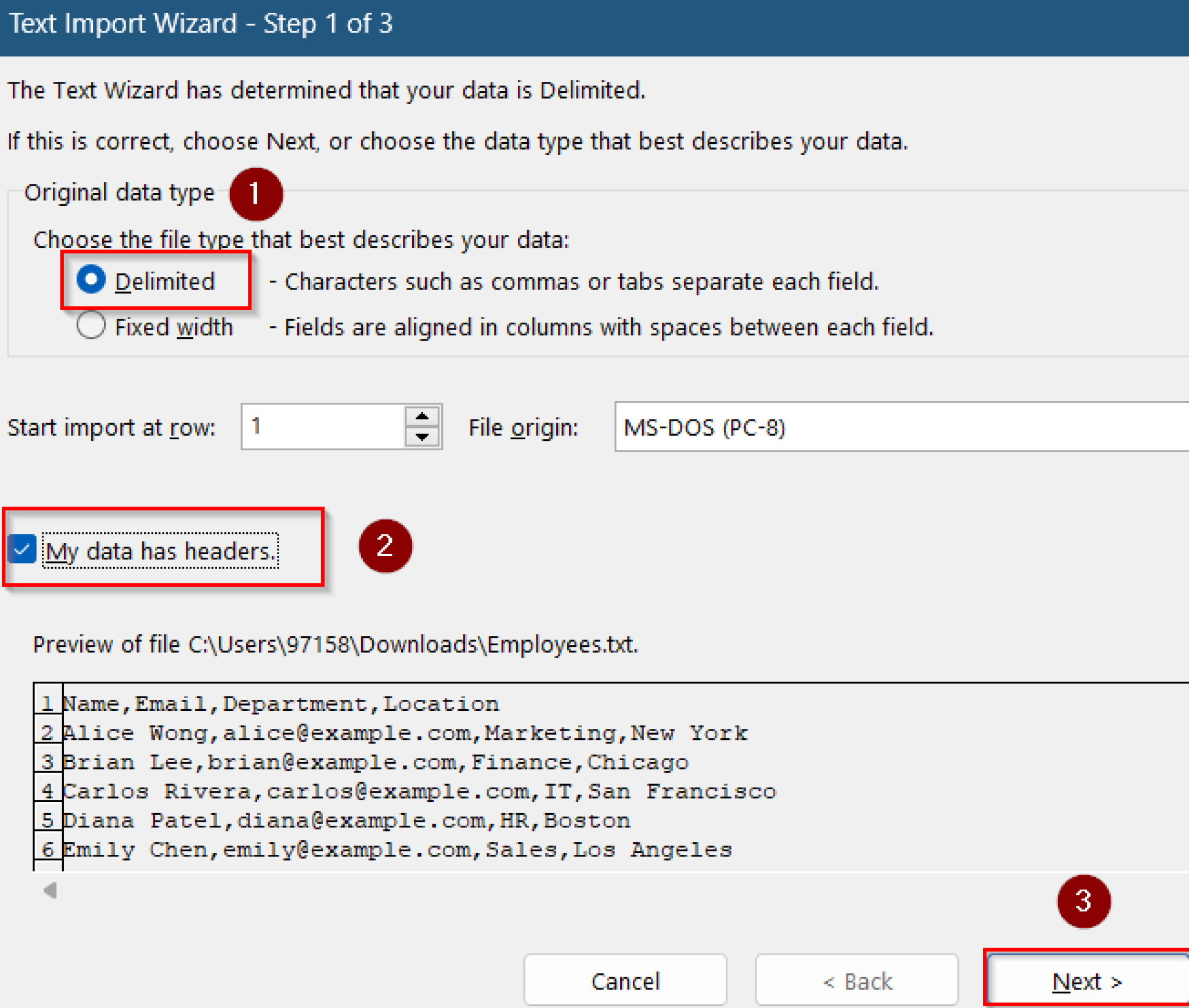
One of the simplest ways to convert a. txt file to Excel is through Excel s native import characteristic. This method works best when your datum follows a consistent pattern, such as comma differentiate values (CSV). Follow these steps cautiously:
- Prepare your. txt file: Open the file in a text editor like Notepad or Notepad to control arrange. Remove extra spaces, fix inconsistent delimiters, and ensure each row has the same turn of columns.
- Save the file right: Save the file with a. csv extension instead of. txt Excel recognizes CSV format mechanically. If changing extensions manually, confirm no enshroud characters or encoding issues interfere.
- Open Excel and import: Launch Excel and go to
Data & Data Tools > From Text/CSV. Locate your save file and clickImport. - Set correct delimiter: Excel will prompt you to select the delimiter prefer comma, tab, or space free-base on your file. Click
Finishto load information into a worksheet. - Review and adjust: Check the first few rows for errors. Use
Text to ColumnsunderData > Text to Columnsif information needs divide (e. g., entire names split across columns).
When using Text to Columns, remember that Excel splits datum based on delimiters incorrect selection may merge or split fields unintentionally.
Advanced Methods: Automation with Scripting and Software Tools
For larger datasets or resort transition tasks, automation importantly boosts efficiency. Two democratic approaches include using Python scripts and devote conversion software.
Using Python for Bulk Conversion
Python offers knock-down libraries like
pandasto parse and export. txt files to Excel with minimum code. Example workflow:import pandas as pd # Load .txt file with custom delimiter (e.g., tab) df = pd.read_csv('data.txt', delimiter=' ') # Clean and transform data if needed df.columns = ['Column1', 'Column2', 'Column3'] # Export to Excel df.to_excel('output.xlsx', index=False, sheet_name='Sheet1') Python requires canonic inscribe knowledge but enables scalable, repeatable conversions idealistic for information analysts and developers.
Dedicated Conversion Tools
Several costless and paid tools simplify. txt to Excel transition without program. Examples include:
- FreeFormatter. com: Upload. txt, select delimiter, and export to Excel with one click.
- Online Convert. com: Supports batch uploads and multiple formats include TSV and CSV.
- Text to Excel Converter by SoftMaker: Offers a lightweight desktop app with preview and initialise options.
Always verify output files for initialize consistency, especially when convert large or complex datasets.
Best Practices for Accurate Conversion
To control your convert Excel file is reliable and usable, follow these guidelines:
- Validate data types: Ensure numbers appear numeric, dates are agnise, and text fields are properly aligned.
- Handle missing values: Decide whether to fill gaps with blanks, zeros, or remove incomplete rows consistently.
- Preserve arrange: Use Excel s
Text to ColumnswithDelimitedmode to maintain original spacing and punctuation. - Check row counts: Confirm the act of rows matches expectations unexpected gaps may indicate parsing errors.
Note: When convert from txt, leading trailing spaces often cause misalignment trim whitespace during import or script processing.
Final Thoughts
Converting a. txt file to Excel is a hardheaded skill that transforms raw text into actionable data. Whether using Excel s built in tools, Python scripting, or narrow software, the core destination remains the same: extract clarity from chaos. By understanding your file s construction, choosing the right method, and applying careful validation, you insure your data is not only organized but also ready for analysis, report, and share. With these techniques, even complex textual information becomes accessible, gift users to work smarter not harder.
Related Terms:
- converting text file to excel
- convert text file into excel
- change txt file into excel
- salvage txt file as excel
- vary text document to excel
- salvage txt file as excel