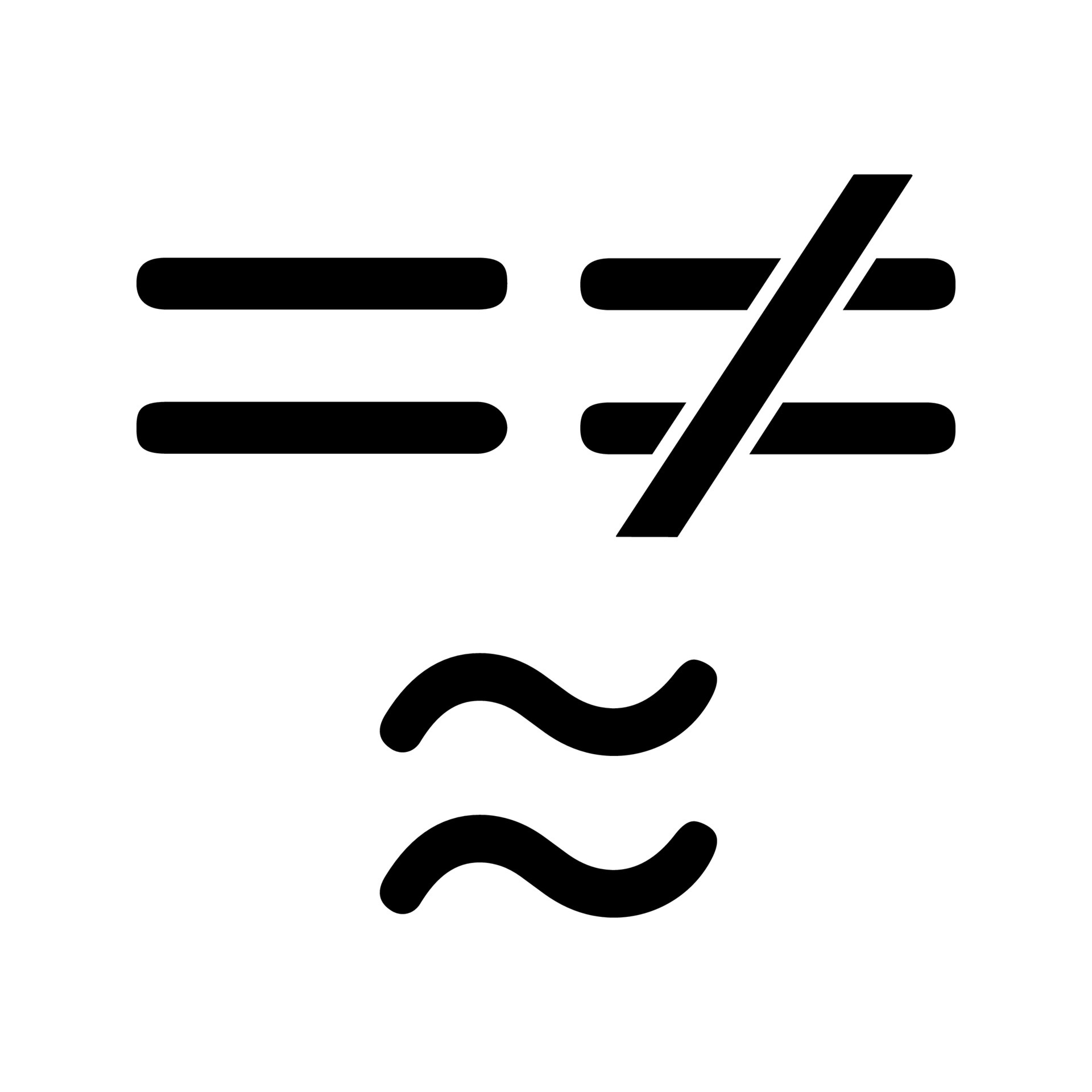

In the realm of programming and mathematics, the Not Equal Symbol plays a crucial role in comparing values and get decisions. This symbol, oft symbolize as ""! or "", is rudimentary in assorted programming languages and numerical expressions. Understanding how to use the Not Equal Symbol efficaciously can importantly enhance your gull skills and problem resolve abilities.
Understanding the Not Equal Symbol
The Not Equal Symbol is used to check if two values are not the same. In program, this is all-important for conditional statements, loops, and functions. The symbol varies slightly depending on the programme language:
- In many languages like C, C, Java, and JavaScript, the Not Equal Symbol is represented as ""!.
- In languages like SQL and some versions of BASIC, the symbol is "".
Regardless of the syntax, the purpose remains the same: to determine if two values are different.
Using the Not Equal Symbol in Programming
Let's delve into how the Not Equal Symbol is used in different program languages.
JavaScript
In JavaScript, the Not Equal Symbol is used to compare values in conditional statements. Here's a elementary representative:
let a = 5;
let b = 10;

if (a != b) {
  console.log("a is not equal to b");
} else {
  console.log("a is equal to b");
}
In this model, the preconditiona != bevaluates to true because 5 is not equal to 10, so the message "a is not adequate to b" is printed to the console.
Python
In Python, the Not Equal Symbol is also used to compare values. Here's an example:
a = 5
b = 10

if a != b:
    print("a is not equal to b")
else:
    print("a is equal to b")
Similar to JavaScript, the conditiona != bevaluates to true, and the message "a is not adequate to b" is printed.
SQL
In SQL, the Not Equal Symbol is used in queries to filter results based on inequality. Here's an exemplar:
SELECT * FROM employees
WHERE department <> 'Sales';
This query selects all records from the "employees" table where the "department" is not equal to 'Sales'.
Common Use Cases for the Not Equal Symbol
The Not Equal Symbol is versatile and can be used in various scenarios. Here are some mutual use cases:
- Conditional Statements: To execute code blocks base on whether two values are not adequate.
- Loops: To control the flow of loops by ascertain if a status is not met.
- Functions: To revert different results based on the inequality of input parameters.
- Data Validation: To ensure that input information meets certain criteria by checking if it is not equal to expected values.
Best Practices for Using the Not Equal Symbol
While the Not Equal Symbol is straightforward, there are best practices to follow for effectual use:
- Consistency: Use the same syntax systematically within your codebase to avoid discombobulation.
- Readability: Ensure that your conditional statements are easy to read and understand.
- Type Checking: Be aware of type differences, especially in languages that distinguish between different types of values.
for instance, in JavaScript, it's significant to use the strict inequality operator!==when you want to check both value and type:
let a = 5;
let b = '5';

if (a !== b) {
  console.log("a is not equal to b in value and type");
} else {
  console.log("a is equal to b in value and type");
}
In this case, the statusa !== bevaluates to true because 5 (a number) is not adequate to '5' (a string), so the message "a is not adequate to b in value and type" is print.
Common Mistakes to Avoid
When using the Not Equal Symbol, there are a few common mistakes to avoid:
- Incorrect Syntax: Using the wrong symbol for the program language you are work with.
- Logical Errors: Misinterpreting the results of the comparison, stellar to incorrect program deportment.
- Type Mismatches: Not accounting for type differences, which can lead to unexpected results.
for case, in Python, using the wrong symbol can lead to syntax errors:
a = 5
b = 10

if a <> b:  # Incorrect syntax in Python
    print("a is not equal to b")
else:
    print("a is equal to b")
In this case, the code will raise a syntax error because "" is not a valid Not Equal Symbol in Python.
Advanced Usage of the Not Equal Symbol
Beyond canonical comparisons, the Not Equal Symbol can be used in more supercharge scenarios. Here are a few examples:
Nested Conditional Statements
You can use the Not Equal Symbol in nested conditional statements to make complex logic:
let a = 5;
let b = 10;
let c = 15;

if (a != b) {
  if (b != c) {
    console.log("a is not equal to b and b is not equal to c");
  } else {
    console.log("b is equal to c");
  }
} else {
  console.log("a is equal to b");
}
In this illustration, the cuddle conditions check multiple inequalities, grant for more granular control over the program flow.
Array and Object Comparisons
In JavaScript, you can use the Not Equal Symbol to compare arrays and objects. However, it's crucial to note that arrays and objects are liken by mention, not by value:
let arr1 = [1, 2, 3];
let arr2 = [1, 2, 3];
let arr3 = arr1;

if (arr1 != arr2) {
  console.log("arr1 is not equal to arr2");
} else {
  console.log("arr1 is equal to arr2");
}

if (arr1 != arr3) {
  console.log("arr1 is not equal to arr3");
} else {
  console.log("arr1 is equal to arr3");
}
In this example,arr1 != arr2evaluates to true becausearr1andarr2are different references, even though they carry the same values. conversely,arr1 != arr3evaluates to false becausearr1andarr3credit the same array.
Note: To compare arrays and objects by value, you need to use more boost techniques, such as JSON stringification or custom comparison functions.
Comparing Strings with the Not Equal Symbol
Comparing strings with the Not Equal Symbol is straightforward but requires attending to case sensibility and whitespace. Here's an example in Python:
str1 = "Hello"
str2 = "hello"

if str1 != str2:
    print("str1 is not equal to str2")
else:
    print("str1 is equal to str2")
In this model, the stipulationstr1 != str2evaluates to true because "Hello" and "hello" are not the same due to case sensitivity.
Comparing Numbers with the Not Equal Symbol
Comparing numbers with the Not Equal Symbol is broadly simpler than equate strings. Here's an illustration in JavaScript:
let num1 = 5.0;
let num2 = 5;

if (num1 != num2) {
  console.log("num1 is not equal to num2");
} else {
  console.log("num1 is equal to num2");
}
In this model, the conditionnum1 != num2evaluates to false because 5. 0 and 5 are deal adequate in JavaScript.
Comparing Booleans with the Not Equal Symbol
Comparing boolean values with the Not Equal Symbol is also straightforward. Here's an example in Python:
bool1 = True
bool2 = False

if bool1 != bool2:
    print("bool1 is not equal to bool2")
else:
    print("bool1 is equal to bool2")
In this example, the conditionbool1 != bool2evaluates to true because True and False are not adequate.
Comparing Dates with the Not Equal Symbol
Comparing dates with the Not Equal Symbol requires heedful plow of date formats. Here's an example in JavaScript:
let date1 = new Date("2023-10-01");
let date2 = new Date("2023-10-02");

if (date1 != date2) {
  console.log("date1 is not equal to date2");
} else {
  console.log("date1 is equal to date2");
}
In this representative, the conditiondate1 != date2evaluates to true because the dates are different.
Comparing Null and Undefined with the Not Equal Symbol
Comparing null and undefined values with the Not Equal Symbol can direct to interesting results. Here's an illustration in JavaScript:
let value1 = null;
let value2 = undefined;

if (value1 != value2) {
  console.log("value1 is not equal to value2");
} else {
  console.log("value1 is equal to value2");
}
In this example, the statusvalue1 != value2evaluates to false because null and undefined are considered equal when using the loose inequality operator. To check for strict inequality, you should use the strict inequality operator!==:
if (value1 !== value2) {
  console.log("value1 is not equal to value2 in value and type");
} else {
  console.log("value1 is equal to value2 in value and type");
}
In this case, the conditionvalue1 !== value2evaluates to true because null and undefined are different types.
Using the Not Equal Symbol in Loops
The Not Equal Symbol can be used to control the flow of loops. Here's an exemplar in Python:
numbers = [1, 2, 3, 4, 5]

for num in numbers:
    if num != 3:
        print(num)
In this example, the loop iterates through the list of numbers and prints each turn except for 3, demonstrating how the Not Equal Symbol can be used to filter values in a loop.
Using the Not Equal Symbol in Functions
The Not Equal Symbol can also be used within functions to return different results based on input parameters. Here's an example in JavaScript:
function checkEquality(a, b) {
  if (a != b) {
    return "a is not equal to b";
  } else {
    return "a is equal to b";
  }
}

console.log(checkEquality(5, 10)); // Output: "a is not equal to b"
console.log(checkEquality(5, 5));  // Output: "a is equal to b"
In this instance, the mapcheckEqualitytakes two parameters and returns a message show whether they are equal or not.
Using the Not Equal Symbol in Data Validation
The Not Equal Symbol is often used in data validation to ensure that input information meets certain criteria. Here's an example in Python:
def validate_age(age):
    if age != None and age >= 18:
        return "Valid age"
    else:
        return "Invalid age"

print(validate_age(20))  # Output: "Valid age"
print(validate_age(15))  # Output: "Invalid age"
print(validate_age(None))  # Output: "Invalid age"
In this example, the mapvalidate_agechecks if the input age is not null and is greater than or adequate to 18. If both conditions are met, it returns "Valid age"; otherwise, it returns "Invalid age".
Using the Not Equal Symbol in Error Handling
The Not Equal Symbol can be used in mistake handling to check for unexpected values. Here's an example in JavaScript:
try {
  let result = someFunction();
  if (result != expectedValue) {
    throw new Error("Unexpected result");
  }
} catch (error) {
  console.error(error.message);
}
In this example, the code checks if the result ofsomeFunction()is not adequate toexpectedValue. If it is not, an mistake is thrown and caught in the catch block.
Using the Not Equal Symbol in Database Queries
In SQL, the Not Equal Symbol is used to filter records establish on inequality. Here's an example:
SELECT * FROM employees
WHERE department <> 'Sales' AND salary > 50000;
This query selects all records from the "employees" table where the "department" is not adequate to 'Sales' and the "salary" is greater than 50, 000.
Using the Not Equal Symbol in Regular Expressions
While regular expressions themselves do not use the Not Equal Symbol, you can use it in conditional statements to check if a string matches a pattern. Here's an exemplar in Python:
import re

pattern = r'^d+$'
string = "12345"

if not re.match(pattern, string):
    print("String does not match the pattern")
else:
    print("String matches the pattern")
In this model, the code checks if the thread "12345" matches the pattern for digits only. If it does not match, the message "String does not match the pattern" is printed.
Using the Not Equal Symbol in File Operations
The Not Equal Symbol can be used in file operations to compare file contents or metadata. Here's an example in Python:
file1 = open('file1.txt', 'r')
file2 = open('file2.txt', 'r')

content1 = file1.read()
content2 = file2.read()

if content1 != content2:
    print("File contents are not equal")
else:
    print("File contents are equal")

file1.close()
file2.close()
In this example, the code reads the contents of two files and compares them using the Not Equal Symbol. If the contents are not equal, the message "File contents are not adequate" is printed.
Using the Not Equal Symbol in Network Programming
In meshwork programme, the Not Equal Symbol can be used to compare network addresses, ports, or other meshwork connect data. Here's an example in Python using the socket library:
import socket

host1 = '192.168.1.1'
host2 = '192.168.1.2'

if host1 != host2:
    print("Hosts are not equal")
else:
    print("Hosts are equal")
In this representative, the code compares two IP addresses using the Not Equal Symbol. If the addresses are not adequate, the message "Hosts are not adequate" is printed.
Using the Not Equal Symbol in Web Development
In web development, the Not Equal Symbol is often used in JavaScript to compare exploiter input, validate forms, and deal events. Here's an example:
function validateForm() {
  let username = document.getElementById('username').value;
  let password = document.getElementById('password').value;

  if (username != '' && password != '') {
    alert('Form is valid');
  } else {
    alert('Form is invalid');
  }
}
In this example, the functionvalidateFormchecks if the username and password fields are not empty. If both fields are fill, the message "Form is valid" is exhibit; otherwise, the message "Form is invalid" is expose.
Using the Not Equal Symbol in Mobile App Development
In mobile app development, the Not Equal Symbol is used to compare exploiter inputs, validate datum, and control the app's behavior. Here's an example in Swift:
let userInput = "12345"
let expectedInput = "54321"

if userInput != expectedInput {
    print("User input does not match the expected input")
} else {
    print("User input matches the expected input")
}
In this instance, the code compares the user input with the look input using the Not Equal Symbol. If they do not match, the message "User input does not match the expect input" is printed.
Using the Not Equal Symbol in Game Development
In game development, the Not Equal Symbol is used to compare game states, player inputs, and other game related datum. Here's an representative in C using Unity:
if (playerHealth != 0) {
    Debug.Log("Player is still alive");
} else {
    Debug.Log("Player is dead");
}
In this exemplar, the code checks if the player's health is not adequate to 0. If the player's health is greater than 0, the message "Player is still alive" is publish; otherwise, the message "Player is dead" is printed.
Using the Not Equal Symbol in Machine Learning
In machine hear, the Not Equal Symbol is used to compare model predictions, valuate performance metrics, and handle data preprocessing. Here s an instance in Python using scikit le
Related Terms:
- not equal symbol in python
- less than sign symbol
- not equal symbol copy
- not adequate symbol in word
- not adequate symbol keyboard shortcut
- greater than or equal symbol