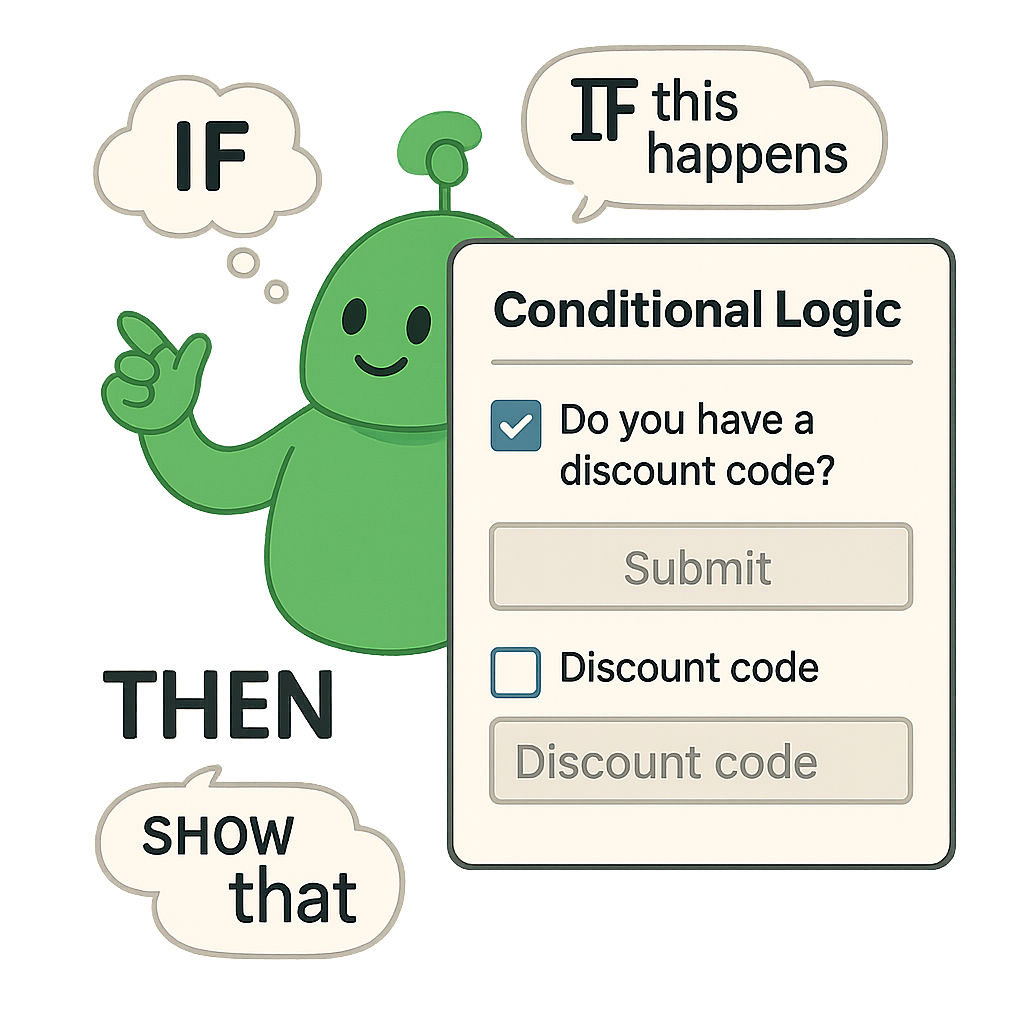

Creating dynamical and responsive websites requires more than just beautiful templates true tractability comes from sound conditional logic built straight into platforms like Squarespace. One of the most powerful tools available is Squarespace Form Conditional Logic, which allows creators to seamster form behavior based on user input, heighten both exploiter experience and data accuracy. Unlike stable forms that deliver the same questions to every visitant, conditional logic enables personalized pathways, skip irrelevant fields, establish optional help text, or even hiding entire sections. This capacity transforms generic forms into level-headed tools that adapt in existent time, reducing friction and increasing closing rates. Whether establish a mere contact form or a complex conduct capture system, understanding how to apply and leverage Squarespace s form conditional logic is essential for mod web design.
Understanding Squarespace Form Conditional Logic
Conditional logic in Squarespace forms lets you delimitate rules that trigger specific actions depend on what a exploiter selects. for instance, take Yes to a query about ware interest might reveal additional features or pricing options, while a No could skip those details completely. This dynamic demeanor relies on form conditions —predefined triggers tied to field values. When a visitor answers a question, Squarespace evaluates the condition and displays the appropriate follow-up element, such as a text field, dropdown, or image carousel. This approach ensures users only see relevant content, minimizing confusion and improving engagement.
The groundwork of this logic lies in setting up conditions based on battlefield responses. Each stipulation checks the value of one or more form fields and activates a corresponding action if the criteria match. These actions can include showing or hiding elements, enabling disenable buttons, or redirect to different pages. By combining multiple conditions, creators build convolute workflows that respond exactly to exploiter intent.
| Condition Type | Example Use Case | Result |
|---|---|---|
| Field Value Match | Selecting Premium Plan in subscription tier | Show advanced characteristic list and price table |
| Multiple Selection Check | Choosing both Email Marketing and Analytics options | Reveal integrating setup form |
| Dropdown Selection | Answering No to Do you involve a demo? | Hide demo request form section |
| Empty Field Response | Leaving a required Company Name battlefield blank | Display mistake message and prevent entry |
| Field Value Match | Selecting Premium Plan in subscription tier | Show advanced feature list and pricing table |
| Multiple Selection Check | Choosing both Email Marketing and Analytics options | Reveal integration setup form |
| Dropdown Selection | Answering No to Do you ask a demo? | Hide demo request form subdivision |
| Empty Field Response | Leaving a required Company Name field blank | Display fault message and prevent compliance |
Note: Conditional logic works best when match with clear, purpose driven form design each condition should serve a distinct user journey goal.
To set up conditional logic, begin by name key decision points within your form. These often include:
User preferences (e. g., ware interest, service level)
Previous selections (e. g., Did you sign up for newssheet?)
Demographic filters (e. g., region, job role)
Optional responses that unlock further questions
Each condition must reference a specific form field and delimit a clear true false induction. Squarespace s interface makes this intuitive through its optical constructor, let drag and drop status conception join directly to battleground values.
Pro Tip: Test each condition exhaustively using the preview mode to ensure logic flows aright and no edge cases break functionality.
One of the most mutual applications is guiding users through multi step forms. For instance, a homepage signup form might ask:
What is your primary goal?
If Marketing demonstrate form fields for campaign types and budget
If Support break assist resources and ticket compliance options
This targeted approach reduces cognitive load and increases conversion. Similarly, conditional logic helps collect accurate data by shroud irrelevant fields, reducing errors and improving backend treat efficiency.
Note: Always validate conditional logic with real user scenarios to avoid confusing workflows or miss inputs.
Beyond introductory visibility toggles, advanced users can combine conditions to make branching paths. for example:
A exploiter selects E commerce under line type
Then chooses Small Business show inventory management tools
Else show enterprise dashboards
Such branching enhances personalization and ensures users only interact with relevant content, get forms feel smarter and more responsive.
Note: Complex logic may require measured planning document your conditions to maintain clarity during updates or team quislingism.
Implementing Squarespace Form Conditional Logic not only improves usability but also strengthens datum unity. By show only necessary fields, you cut form fatigue and minimize incomplete submissions. Users treasure streamlined experiences, stellar to higher completion rates and richer insights. Whether found a simple feedback form or a eminent stakes leave gen campaign, mastering conditional logic empowers creators to establish forms that truly adapt to their hearing s needs.
In practice, Squarespace s form conditional logic bridges the gap between stable templates and dynamic user experiences. It transforms forms from passive input tools into active guides, responding intelligently to every choice. As digital expectations grow, leverage this characteristic becomes not just helpful but all-important for delivering polished, exploiter centric websites that convert and engage.