
Understanding the complexities of labor laws is indispensable for both employers and employees in the Tar Heel State. When a large scale business cloture or mass layoff occurs, the emotional and fiscal toll can be overwhelming. To mitigate this wallop, federal and state level protections are in range to insure workers are not caught off guard. One of the most critical pieces of legislating in this regard is the Worker Adjustment and Retraining Notification (WARN) Act. While many connect these protections with union oversight, understanding the specific application of the Warn Act Nc is critical for navigating North Carolina's unequalled economic landscape.
What is the WARN Act?

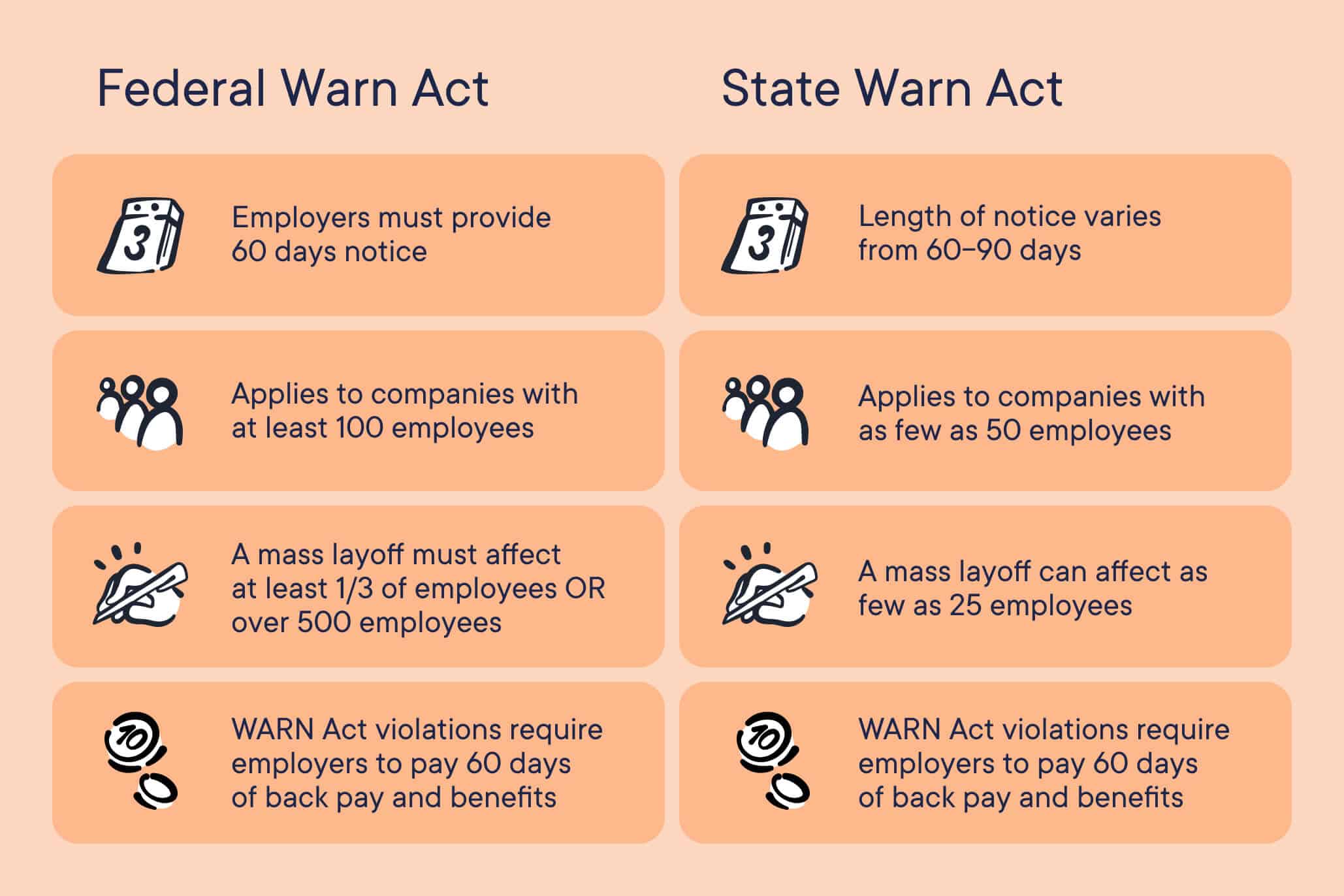
The WARN Act is a union law that requires most employers with 100 or more employees to provide notification 60 calendar days in advance of plant closings and mass layoffs. This advance notice provides workers and their families passage time to adjust to the prospective loss of employment, to essay and get substitute jobs, and, if necessary, to enter skill training or retraining that will allow these workers to successfully compete in the job marketplace.
In North Carolina, there is no separate "mini WARN" state law that imposes extra requirements beyond the federal statute. Instead, the Warn Act Nc process follows the federal guidelines tight, but with specific account requirements to the North Carolina Department of Commerce. This coordination ensures that state rapid response teams can be deployed instantly to assist affected workers.
Key objectives of the lawmaking include:
- Protecting workers and their families from sudden income loss.
- Allowing state agencies to ply job placement services.
- Giving local communities time to prepare for the economic impact of a major employer close.
- Encouraging employers to communicate transparently with their workforce.
Who Must Comply with the Warn Act Nc?

Not every business is subject to the notice requirements. The Warn Act Nc principally applies to larger entities. Specifically, the law covers business enterprises that employ:
- 100 or more full time workers (shut those who have act less than 6 months in the last 12 months).
- 100 or more employees (include part time) who work a combined total of at least 4, 000 hours per week, exclusive of overtime.
Private for profit businesses, non profit organizations, and public quasi public entities that control in a commercial-grade context are generally extend. However, regular federal, state, and local government entities that provide public services are usually exempt from these specific requirements.
Triggering Events: When is Notice Required?

The requirement to issue a notice under the Warn Act Nc is triggered by specific events. Understanding these thresholds is crucial for sound deference. There are two principal categories of triggering events:
1. Plant Closings
A plant closing occurs when an employer shuts down a single site of employment, or one or more facilities or operating units within a single site of employment, if the shutdown results in an employment loss during any 30 day period for 50 or more employees (exclude part time workers).
2. Mass Layoffs
A mass layoff is a reduction in force that is not the effect of a plant close but results in an employment loss at a single site of employment during any 30 day period for:
- At least 33 of the active employees (excluding part time workers) AND at least 50 employees (excluding part time workers).
- OR at least 500 employees (shut part time workers), careless of the percentage of the workforce.
The postdate table summarizes the master thresholds for quick acknowledgment:
| Event Type | Employee Threshold | Time Frame |
|---|---|---|
| Plant Closing | 50 total time employees | 30 Days |
| Mass Layoff (Option A) | 500 full time employees | 30 Days |
| Mass Layoff (Option B) | 50 499 employees (if 33 of staff) | 30 Days |
Note: Employment losses that occur within a 90 day period may be combine if they do not individually encounter the threshold but conjointly do, unless the employer can prove the losses were for disunite and distinct causes.
Notice Requirements and Delivery

When a company determines that a Warn Act Nc event is occurring, they must provide pen notice at least 60 days in approach. This notice must be delivered to respective parties to ensure a comprehensive response.
The notice must be sent to:
- Affected Employees: This includes those who may reasonably expect to experience an employment loss. If there is a union, the notice is sent to the union representative rather than case-by-case workers.
- The State Dislocated Worker Unit: In North Carolina, this is the Workforce Solutions division of the NC Department of Commerce.
- Local Government: The chief elected official of the unit of local government where the fold or layoff will occur (e. g., the Mayor or County Commission Chair).
What Must the Notice Include?
The message of the notice is not just a simple letter; it must control specific info required by law:
- A statement as to whether the action is expected to be lasting or temporary.
- The expected date when the plant shut or mass layoff will commence and the expected date of the individual s interval.
- An denotation of whether "find rights" (the right of a senior employee to take the position of a junior employee) exist.
- Contact info for a fellowship official who can furnish further information.
Exceptions to the 60 Day Rule

While the 60 day rule is the standard, there are three primary exceptions where an employer might ply less than 60 days' notice under the Warn Act Nc. Even in these cases, the employer must provide as much notice as is feasible and a brief statement of the reasons for reducing the notice period.
- Faltering Company: This applies only to plant closings. If a fellowship is actively attempt capital or line to stay afloat and passably believes that giving notice would preclude them from obtaining that majuscule, they may reduce the notice period.
- Unforeseeable Business Circumstances: This applies to layoffs or closings caused by business circumstances that were not reasonably foreseeable at the time the 60 day notice would have been required (e. g., a sudden termination of a major contract).
- Natural Disaster: If the shut or layoff is the unmediated result of a natural disaster such as a flood, earthquake, or drought.
Note: The charge of proof rests entirely on the employer to demonstrate that these exceptions apply to their specific position.
Penalties for Non Compliance

Failure to comply with the Warn Act Nc guidelines can be costly for employers. Enforcement is care through the federal court system; the North Carolina Department of Labor does not have the authority to enforce WARN Act violations directly.
Potential penalties include:
- Back Pay: Employers may be require to pay each affected employee back pay for each day of the encroachment (up to 60 days).
- Benefits: Payment for the cost of any benefits the employee would have been title to, include aesculapian expenses incurred that would have been covered by an insurance plan.
- Civil Penalties: A civil penalty of up to 500 for each day of intrusion of the notice requirement to the local government, unless the employer pays all owed amounts to employees within three weeks of the shutdown layoff.
- Attorney Fees: In a successful lawsuit, the court may allow the prevailing party to recover reasonable attorney's fees.
How North Carolina Supports Dislocated Workers

When a Warn Act Nc notice is filed, it triggers the North Carolina Rapid Response program. This is a proactive, business rivet scheme contrive to help both the employer and the workers. The goal is to transition employees to new jobs as quickly as possible.
The NC Department of Commerce provides several services upon receiving a notice:
- On site Meetings: Coordinating with the employer to converge with staff and explicate available resources.
- Unemployment Insurance Information: Helping workers read how to file for and receive benefits.
- Career Coaching: Offering workshops on resume compose, question, and job searching.
- Training Opportunities: Connecting workers with community colleges and vocational schools for retrain through the Workforce Innovation and Opportunity Act (WIOA).
Employer Best Practices for Warn Act Nc

For occupation owners in North Carolina, abidance is about more than just forefend lawsuits; it s about maintaining a repute and indorse the local economy. If your fellowship is facing a substantial reduction in force, consider these steps:
- Audit Your Workforce: Regularly review employee counts and possible site changes to see if you are approaching WARN thresholds.
- Consult Legal Counsel: Before announcing a layoff, speak with an employment attorney who specializes in Warn Act Nc to assure all nuances are cover.
- Maintain Records: Keep detailed records of the reasons for the layoff, the clock, and how notices were delivered.
- Communicate Early: Even if you don't meet the legal 100 employee threshold, providing as much notice as potential is considered a best practice in corporate societal responsibility.
Note: Employers should check that the notice provided is clear and does not use confusing effectual jargon, as the goal is to inform the worker of their status effectively.
Employee Rights and Action Steps

If you believe your rights under the Warn Act Nc have been violated, you are not without recourse. Many employees are unaware that they are entitled to notice until it is too late.
If you have been part of a mass layoff without notice:
- Check Company Size: Determine if your employer has at least 100 full time employees.
- Analyze the Layoff: See if the bit of people let go meets the 50 person or 33 threshold.
- Document Everything: Save your termination missive, your last paystubs, and any internal communications regarding the company's financial health or closure plans.
- Seek Legal Advice: Contact an employment lawyer to discuss the possibility of a class action lawsuit, which is mutual in WARN Act violations.
The Role of Labor Unions in NC WARN Notices
In unionized environments, the Warn Act Nc requirements shift slightly. Instead of notifying every single employee, the employer is lawfully bind to notify the union representative. The union then plays a critical role in negotiate the terms of the layoff, include rupture packages, extended benefits, and retraining opportunities. North Carolina is a "right to work" state, but many manufacturing and transportation sectors still maintain potent union presence where these rules are vital.
Common Misconceptions about Warn Act Nc
There are respective myths surround the Warn Act Nc that can lead to discombobulation for both parties. Clearing these up is indispensable for accurate abidance and outlook setting.
Myth 1: The WARN Act guarantees rift pay.
Actually, the WARN Act does not require employers to supply rift pay. It only requires notice. However, many employers volunteer severance to waive potential effectual claims or as part of a collective bargain agreement.
Myth 2: It applies to all businesses.
As note, it only applies to those with 100 or more employees. Small businesses are loosely exempt from federal WARN requirements, though they must still adhere to other state and union labor laws.
Myth 3: Working remotely exempts you from the WARN Act.
This is a gray area currently being try in courts. Generally, if remote workers are portion to a specific "single site of employment" (like a corporate headquarters in Charlotte or Raleigh), they may still be consider toward the threshold for a Warn Act Nc notice.
Final Considerations for North Carolina Residents
The economical landscape of North Carolina is diverse, ranging from the tech hubs of the Research Triangle to the fabricate centers in the Piedmont. Because the Warn Act Nc relies on federal standards, the protection is robust, but the lack of a "mini WARN" act means that smaller layoffs (under 50 people) much happen without any legal requirement for betterment notice.
Staying informed about your company's health and understanding the triggers of the WARN Act can provide a much necessitate safety net. For employers, the 60 day notice period is an chance to exit a market or scale down operations with dignity and legal security. For employees, it is a period of grace to secure their fiscal future.
Navigating the nuances of the Warn Act Nc requires a clear understanding of union mandates and state resources. By following the 60 day telling guideline, employers can assure they are supporting their workforce while remain compliant with the law. For employees, know that these protections exist provides a stratum of security in an ever changing job grocery. Whether you are an HR professional contrive a transition or a prole concerned about your hereafter, being good versify in these regulations is the first step toward a successful vocation transition.
Related Terms:
- north carolina warn list
- warn notice requirements north carolina
- warn notice charlotte nc
- warn notification north carolina
- nc warn reports
- north carolina mini warn act